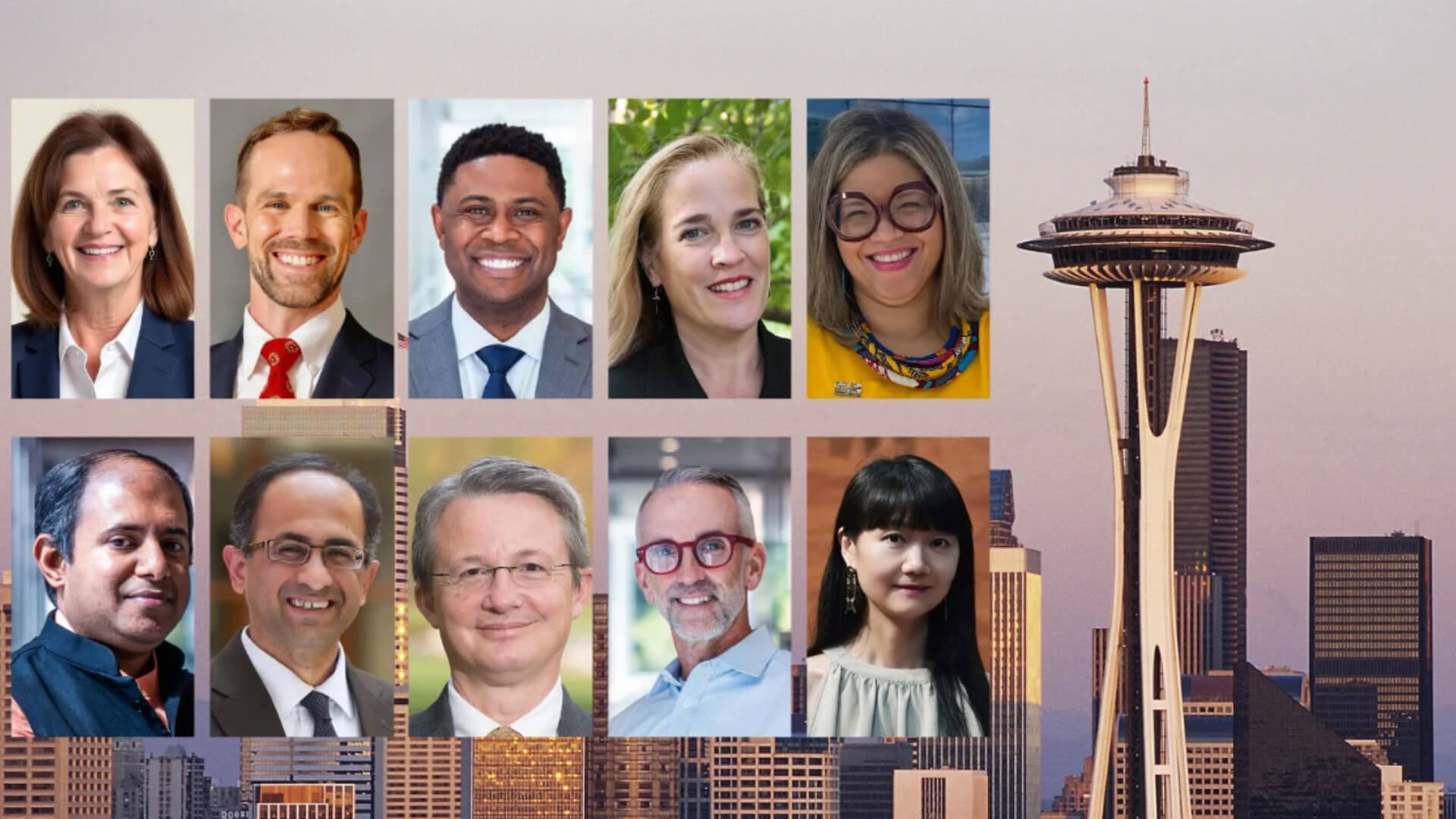

Scientists are moving faster than the policies meant to govern them, and diplomats are trying to keep up. Science and Diplomacy Day brought ambassadors, senior government officials, researchers and industry leaders together to examine how science and global policy are shaping one another in real time. The event, jointly hosted by the School of Public Policy and the Brin Mathematics Research Center, reflected a growing recognition across disciplines: the biggest global challenges today do not fall neatly within science or diplomacy alone.
“Science and technology are not just inputs into policy,” said School of Public Policy Dean Gustavo Flores-Macías in his welcoming remarks. “They are arenas of competition, instruments of statecraft and diplomacy and increasingly objects of governance themselves.”
That point came up throughout the day. Speakers pointed to moments from nuclear weapons to artificial intelligence when scientific breakthroughs forced governments to respond, often without the institutions or frameworks to keep pace. Today, that gap is widening as technologies move faster, spread globally and carry both civilian and national security implications.
University of Maryland leaders and partners framed the gathering as part of a broader effort to bring those conversations into the same room. In many international settings, scientists and diplomats still operate in parallel worlds, with technical expertise separated from decision-making. That disconnect can slow progress on issues ranging from arms control to climate policy.
During the opening panel, Distinguished University Professor Jim Gates, who holds the Clark Leadership Chair in Science and a joint appointment in the Department of Physics and the School of Public Policy, pointed to a long history of scientists stepping into global debates ranging from nuclear weapons to emerging technologies, but cautioned that the relationship remains uneasy. “I find it difficult to say that this constitutes a convergence between science and diplomacy,” said Gates, pointing instead to persistent tensions between scientific independence and political decision-making.
Artificial intelligence surfaced repeatedly throughout the day, not just as a technical challenge but as a test case for how science and diplomacy intersect. Speakers described a landscape where private companies are often ahead of governments, where innovation crosses borders even as nations compete and where regulation struggles to keep up.
Those dynamics are forcing new kinds of collaboration. “We need scientists who are scientists, we need scientists who are diplomats and we need diplomats who are diplomats,” said Allison Schwier of the U.S. State Department, pointing to the need for people who can bridge the gap between technical expertise and policy decisions.
Leaders from government and academia emphasized the role universities play in that space, both as sources of research and as connectors between sectors. The U.S. model that links government, academia and the private sector remains a strength, even as funding patterns and global competition shift.
Participants also pointed to how much research still depends on people moving across borders, especially in fields like mathematics and computing. At the same time, growing concerns about national security and competition are starting to complicate that.
Throughout the day, speakers returned to the shared challenge of how to stay open while competing, how to work together while protecting national interests and how to bring technical expertise into political decisions.