
No Clear Winners in Expanding Use of U.S. Military Force in Venezuela
January 7, 2026
The United States could face rising strategic and political costs as it increasingly turns to military force to manage international crises. Recent actions highlight how the use of force, often justified as limited or deterrent, can escalate tensions, constrain diplomatic options and produce long-term consequences that extend well beyond the immediate objectives.

Gustavo Flores‑Macías
Dean, School of Public Policy
Gustavo Flores-Macías is professor and dean of the University of Maryland School of Public Policy. An expert on Latin American politics, economy and society, he is the author of After Neoliberalism? The Left and Economic Reforms in Latin America(Oxford University Press 2012) and Contemporary Statebuilding: Elite Taxation and Public Safety in Latin America (Cambridge University Press 2022).
Flores-Macías says:
“Despite Maduro’s unpopularity, the White House’s seeming return to gunboat diplomacy touches a sensitive nerve in a region where the US has intervened militarily on numerous occasions. The Trump administration’s revival of the Monroe Doctrine had already raised concern, and the ouster of Maduro sends a strong signal that the Trump Corollary to the Monroe Doctrine will have teeth.”
“While the White House has advanced a law enforcement logic to bring Maduro to federal court to face drug trafficking charges, leaving the rest of the Venezuelan state in place—from the top government officials to the armed forces—is likely to leave corruption intact. By allowing Vice President Delcy Rodríguez, a Maduro loyalist, to become the president, the US has disappointed the many Venezuelans hoping for the arrival of opposition leader María Corina Machado or former presidential candidate in exile Edmundo González Urrutia to occupy the presidency.”
“Rodríguez has now received the public backing of Venezuela’s armed forces as Maduro’s successor, which gives her room for maneuver and undermines the prospects of a transition to democracy and the opposition’s ability to play a role in the near future.”
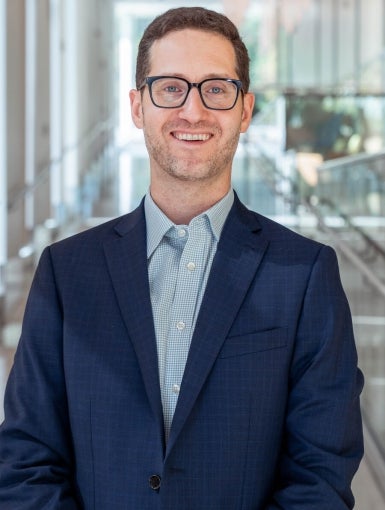
Josh Shifrinson
Associate Professor, School of Public Policy
Joshua Shifrinson is associate professor, senior research fellow at the Center for International and Security Studies at Maryland (CISSM), and director of the Foreign Policy, Strategy and Statecraft (FPSS) Program at the University of Maryland School of Public Policy. As an expert on contemporary international security, his research engages broad issues of great power politics, U.S. foreign policy and diplomatic history. He is the author of Rising Titans, Falling Giants: How Great Powers Exploit Power Shifts (Cornell University Press 2018).
Shifrinson says:
“From the perspective of other governments, the ouster of Venezuela’s leadership undercuts U.S. claims of restraint and raises serious questions about credibility. When stated commitments diverge so quickly from action, foreign capitals are left uncertain about how Washington will use force going forward.”
“Actions taken in Venezuela are not evaluated in isolation. They are read as signals about how the United States approaches regime change, coercion and compliance, especially in a competitive international environment where credibility and precedent matter.”
“The concern is not only the immediate outcome in Venezuela, but how this use of force reshapes expectations abroad. If the threshold for intervention appears low or inconsistently applied, it can make allies nervous and adversaries more cautious in destabilizing ways.”

Alec Worsnop
Assistant Professor, School of Public Policy
Alec Worsnop is assistant professor at the University of Maryland School of Public Policy, research fellow at the Center for International and Security Studies at Maryland (CISSM), and director of the Military Perspectives Speaker Series. An expert on non-state armed actors and civil-military relations, he is the author of Rebels in the Field: Cadres and the Development of Insurgent Military Power (Oxford University Press 2025).
Worsnop says:
“In Venezuela, the absence of clear planning for what comes next is striking. There is little evidence of serious preparation for how political authority will be consolidated or how violence will be managed once the initial intervention phase ends.”
“Interventions fail most often not at the moment force is used, but in the aftermath. Without a clear understanding of who controls armed actors on the ground and how they are organized, it becomes extremely difficult to shape post-intervention outcomes.”
“What is missing in the Venezuela case is a coherent sense of what success looks like and how it would be achieved. Without that clarity, external involvement risks creating instability rather than resolving the conflict it aims to address.”