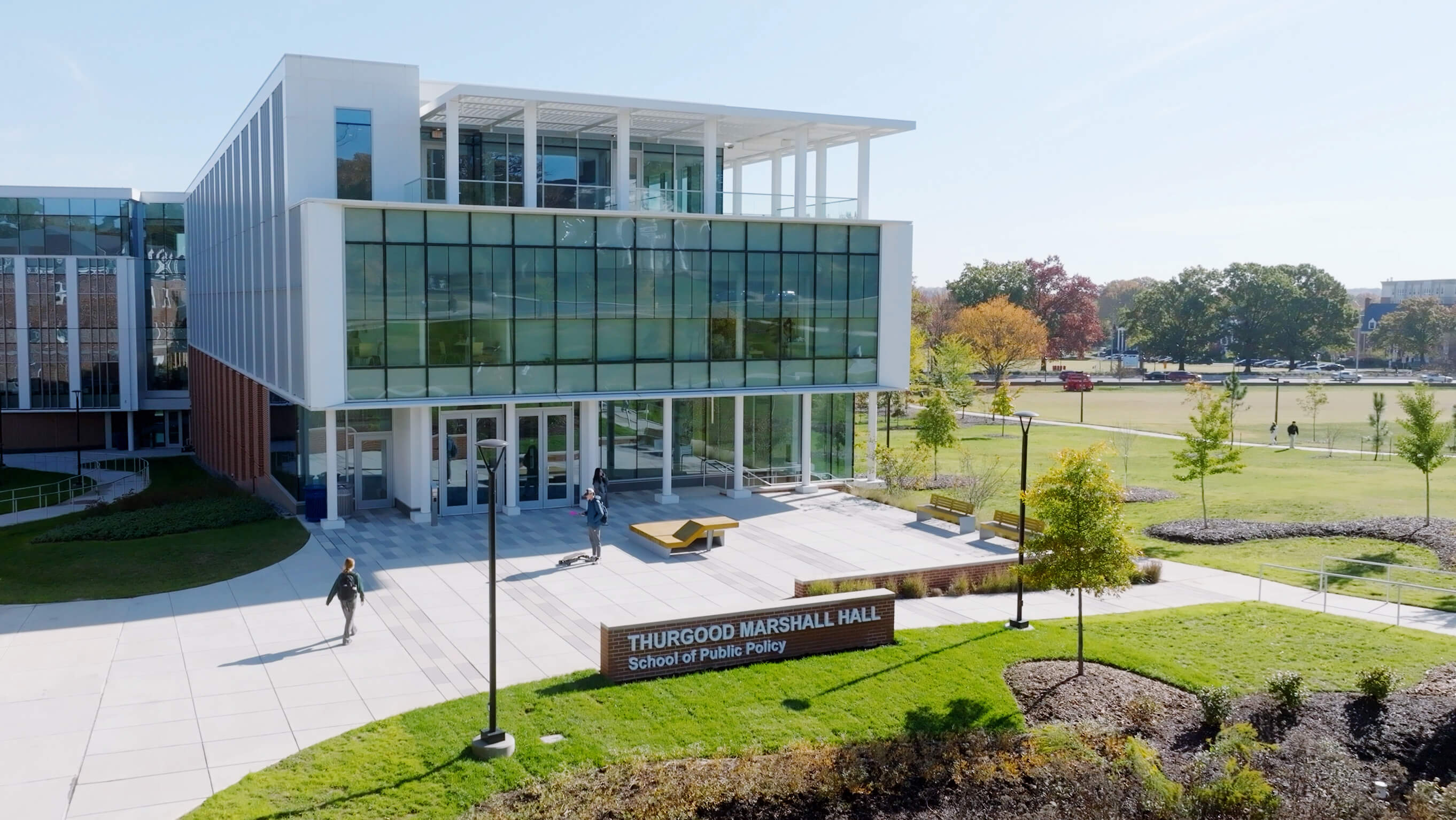
Namrta Sharma is an assistant clinical professor at the School of Public Policy, where she
teaches courses on public policy, leadership and research methods. She is also a senior fellow at
the Institute for Public Leadership at the University of Maryland. Her research focuses on the
role of leadership in effective public management and she has been published in Public
Administration and Development and the Journal of Social Equity and Public Administration.
Before joining the University of Maryland, Sharma held leadership positions in India's
Department of Agriculture.
Sharma holds a master’s degree in physics and public policy and a PhD in public affairs
from the University of Texas at Dallas.
A survey course, focusing on public policy institutions and analytical issues as well as on overview of key public policy problems. Students will be introduced to public policy as a discipline, with a brief overview of the actors and institutions involved in the process and familiarize themselves with the kinds of problems typically requiring public action. The course will examine these problems from a multijurisdictional and multisectoral perspective. Specific policy areas examined include education policy, health policy, economic and budgetary policy, criminal justice policy, environmental policy and national and homeland security policy. The course should permit students to have broad foundational exposure to the field that will give them a solid base for more advanced courses.
Schedule of Classes
Introduces students to the basic logic, frameworks, concepts and techniques to conduct research on matters involved in the analysis of public policy problems. Students are exposed to a variety of methods by which researchers explore tradeoffs in and options for policy that inform solutions and the framing of challenges. Along the way, students will engage relevant literature, cases and episodes that illustrate how different methods and techniques manifest in practice to inform scholarly and policy conversations. Ultimately, the course lays a foundation for future research and policy applications and students emerge from the course able to design a research strategy to address relevant policy questions.
Schedule of Classes
Examination of societal responses to public problems, including actions by government, non-profit and private sector actors, as well as civil society. Students will examine the roles of these various actors, as well as the nature of civic responsibility. The course will examine the various stages of the policy process, asking the following questions: How does something get defined as a problem that requires a public policy response? How do we think about what the options are for this response, and how do we choose among them? What are the factors that contribute to successful policy implementation? How do we evaluate the success of public policies? These questions will be addressed using examples of current public policy problems, and students will be expected to engage in individual and collaborative work to design responses to those problems. Restricted to students in a major in PLCY.
Schedule of Classes